2. 日本語テキスト感情分析
脳内のホルモンと感情について(仮説)
--- The EMOTION CUBE ---
ScreenSaver(Windows, Linux: (python3))
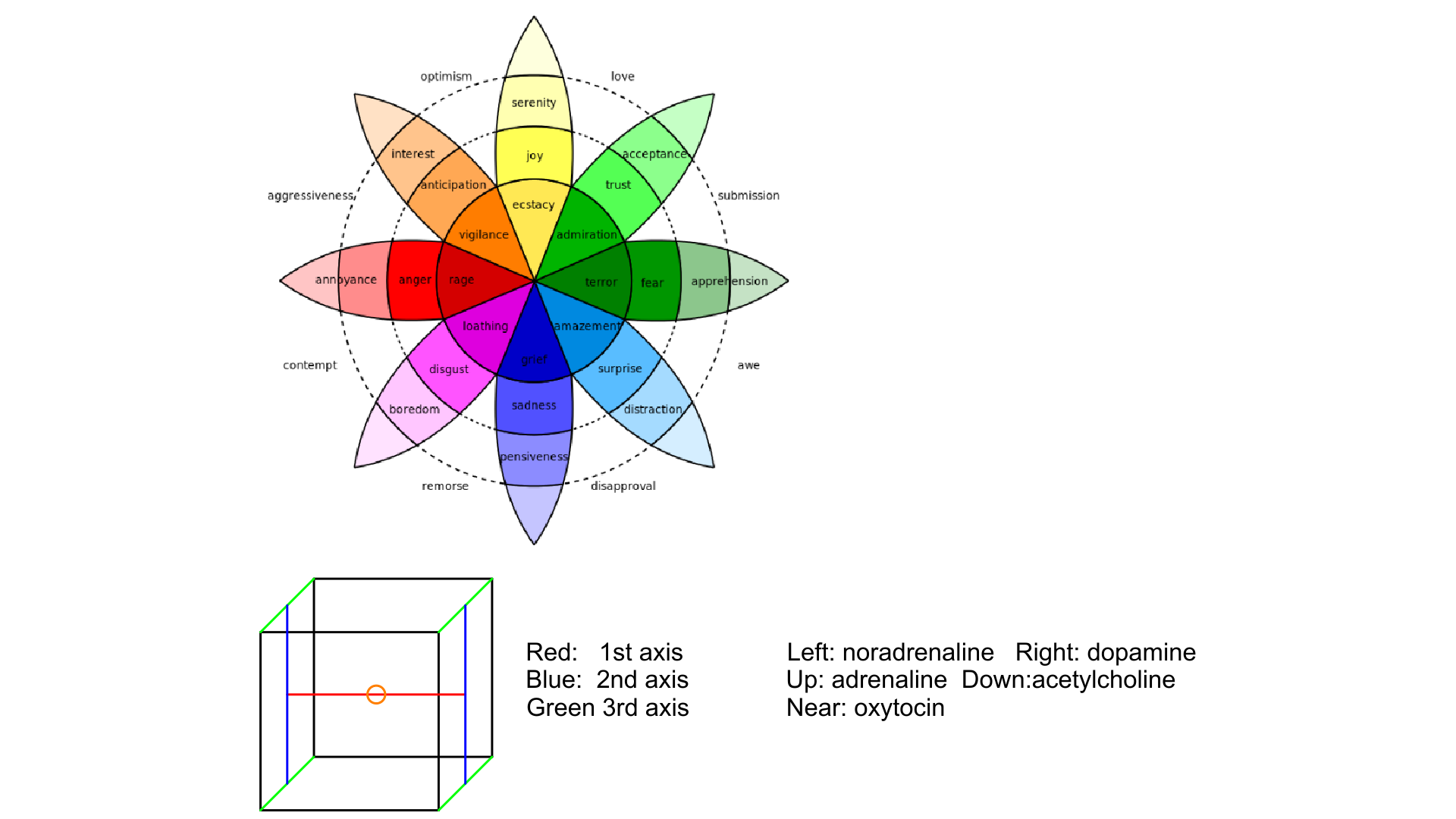
プラチックの感情の環を、立体的に捉える試み。
3次元で感情を表すには、最低でも3種類のホルモン濃度の値が必要。
.bmp)
仮説1、第1軸を「悲しみ」ー「喜び」とした場合。
.bmp)
仮説2、第1軸を「自責の念」ー「愛」とした場合。
以下は、いつだかに勉強会で発表したスライド。
https://docs.google.com/presentation/d/1mKB_lrHF0pER7L-SIEFBvC7-N6_MjKqp2rm5SgIcbfc/edit#slide=id.p
https://www.slideshare.net/hidemune/tcsengpptx
最終更新日:2023/03/09 16:42:49
━━━━━━━━━━━━━━━━━━━━━━━━━━━━━━━━━━━━━━━━━━━━━━━━
Ver.2
脳内のホルモンと感情について
プラチックの感情の環は、感情が16種類に分類されている。
脳は3次元なので、3次元の値(座標・ベクトル)で表せるはず。
扁桃体で感情を司っているので、間にある海馬に注目した。
具体的には、海馬の中に言語や概念の印象が詰まっていると仮定した。
Wikipediaによれば、
・アドレナリン
攻撃的になる
ストレスに対応するときに分泌
→怒り、不安・恐怖
・ノルアドレナリン
ストレスを感じたとき
不快の感情を強める
→うつ、パニック症に
・ドーパミン
快の感情を強める働き
・セロトニン
日光を浴びると作られる
ノルアドレナリンとドーパミンを調節する
プラスに働く
・ヒスタミン
H3型:中枢神経系でヒスタミン、セロトニン、ノルアドレナリンの放出を促進
→焦りが生まれる
→脂肪細胞に蓄積することで処理:太る
・オキシトシン
スキンシップなどの人と人との親密なコミュニケーションの際に分泌される
※3次元化に当たり、2種類の軸の取り方(第一軸を「自責−愛」「悲しみ−喜び」のどちらか)が
考えられたが、ホルモンの分泌と感情の対応を検証したところ、図1で決定としたい。
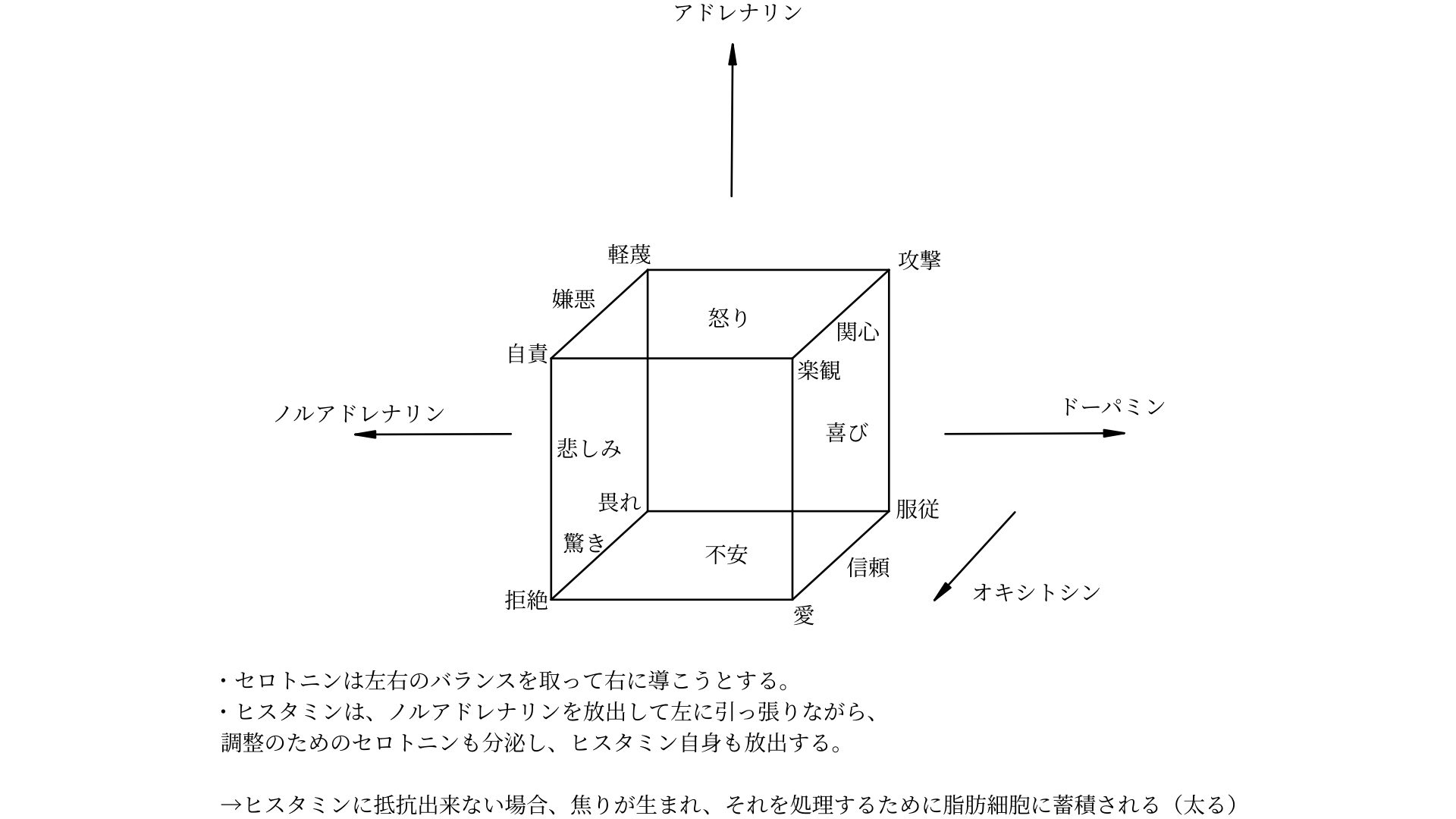
(図1)
左右反転により、「否定」が対応付けることができるようにも思える。
最終更新:2022/05/11 18:47:21
━━━━━━━━━━━━━━━━━━━━━━━━━━━━━━━━━━━━━━━━━━━━━━━━
以下、Ver.1の記事
弊社では、感情に紐付いたコーパス(文例データベース)を作成しています。
今回、聖書に基づいた感情のコーパスを作成致しました。
旧約聖書・新約聖書の合計66書の、日本語と英語の全文が登録されています。
形式は、UTF-8のタブ区切りTSV形式です。
感情は、プラッチクの感情の輪を参考に、16種類を選択しました。
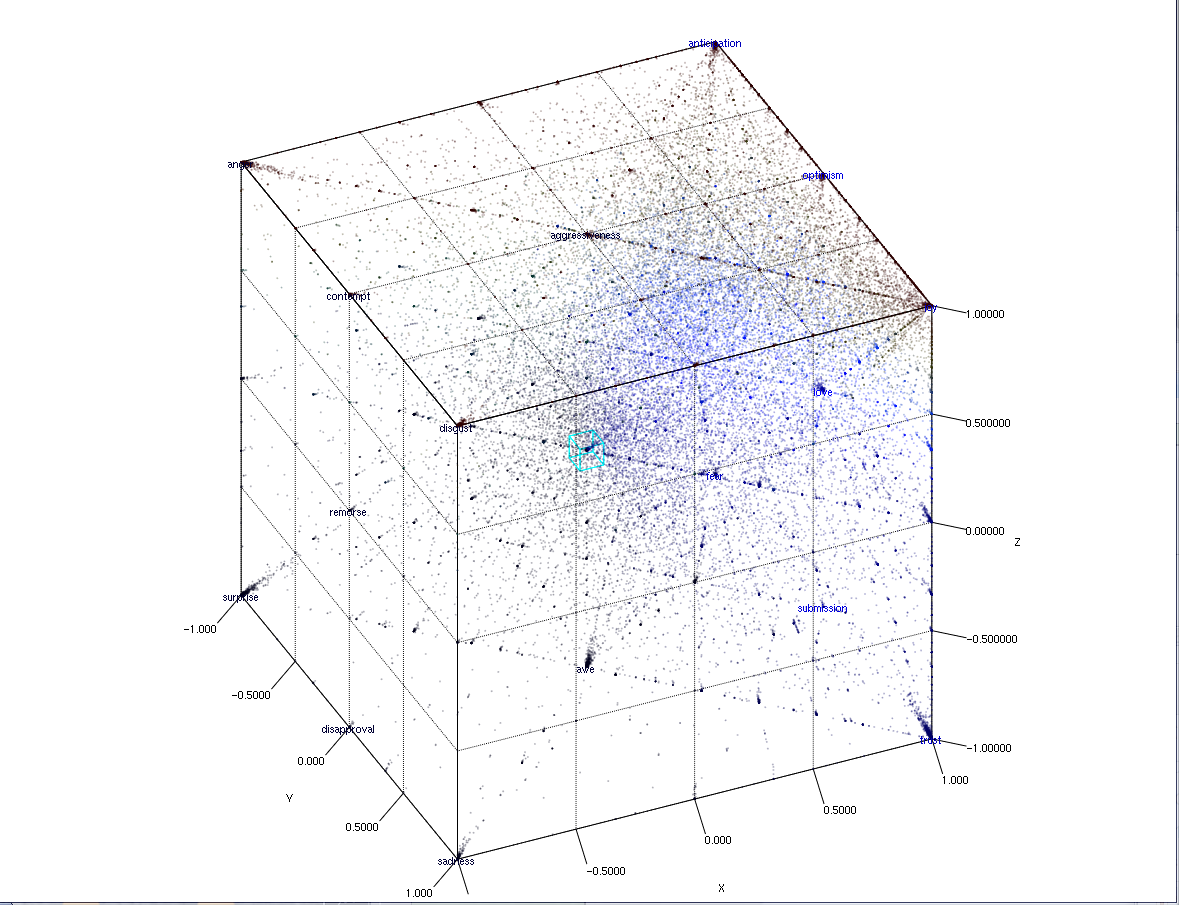
一つの仮説に基づき、以下のような「言語の感情の地図」を得ました。
一つ一つの点が、一つの単語を表しています。
コーパスは鋭意追加中です。
現在138,922件
現状のモデルを評価してみます。
--------------------------------------------
日本を、1枚で。
Vector Normalize...
日本 53.64 愛 登場回数 : 105.0
枚 68.90 素直 登場回数 : 90.0
で 9.20 畏れ 登場回数 : 11264.0
118.63439731921912% 素直
でかける人を、ほほえむ人へ
Vector Normalize...
でかける 71.55 関心 登場回数 : 2.0
人 6.82 畏れ 登場回数 : 7764.0
ほほえむ 127.1 喜び 登場回数 : 6.0
人 6.82 畏れ 登場回数 : 7764.0
へ 6.32 心配 登場回数 : 1356.0
152.0448230091466% 楽観
未来に向かって輝いていくあなたへ。
Vector Normalize...
未来 52.66 素直 登場回数 : 114.0
に 6.23 畏れ 登場回数 : 56867.0
向かって 25.97 攻撃 登場回数 : 303.0
輝いて 74.97 楽観 登場回数 : 26.0
いく 23.14 信頼 登場回数 : 275.0
あなた 13.07 畏れ 登場回数 : 15163.0
へ 6.32 心配 登場回数 : 1356.0
97.45457014357616% 愛
文章生成AIを、思いやりのあるものにしませんか?
お問い合わせは弊社まで。
### Announcement: Transfer of Copyright for Our Software and Word Coordinate Data
In an era where artificial intelligence is rapidly advancing, our understanding of the human mind—often referred to as the "heart" in metaphorical terms—remains one of the most profound and elusive frontiers of science and philosophy. Traditionally, human emotions have been viewed through fragmented lenses: psychology describes them as subjective experiences, neuroscience links them to brain structures like the amygdala and hippocampus, and endocrinology ties them to hormonal fluctuations such as adrenaline for anger and fear, dopamine for pleasure, serotonin for mood regulation, and oxytocin for bonding and empathy. Yet, these perspectives often fail to integrate into a cohesive model that captures the multidimensional nature of the human psyche. What if we could quantify the "heart"—not as a poetic abstraction, but as a navigable coordinate system where emotions intersect with language, biology, and cognition? This is the revolutionary insight underpinning our technology at Tanaka Computer Service Co., Ltd.
Drawing from Robert Plutchik's Wheel of Emotions, we have pioneered a three-dimensional representation of human feelings, classifying them into 16 core categories and mapping them onto axes influenced by hormonal concentrations. For instance, the axis of "sadness-joy" or "self-blame-love" isn't arbitrary; it's grounded in verifiable neurochemical pathways. Our emotional corpus, derived from extensive sources including biblical texts in Japanese and English (comprising over 138,922 data points in UTF-8 TSV format), associates words and phrases with these coordinates. This allows for precise sentiment analysis: a phrase like "Japan, in one sheet" evokes vectors of love, honesty, and reverence, while "Turning those who depart into those who smile" radiates optimism. By bridging linguistics with biology, our approach challenges the reductionist view that the mind is merely a byproduct of neurons firing randomly. Instead, it posits a structured, empathetic framework where AI can not only recognize but also generate compassionate responses—fostering a future where technology truly understands and nurtures the human spirit.
This innovation isn't confined to theoretical musings; it's embodied in our practical software, "upEmot," a Python3-based screensaver compatible with Windows and Linux. It visualizes emotional landscapes in real-time, enabling applications in mental health, education, marketing, and AI development. Imagine AI companions that detect subtle shifts in user mood through language, offering support rooted in genuine emotional intelligence rather than scripted algorithms. In a world grappling with mental health crises, social disconnection, and ethical AI dilemmas, this technology holds the potential to redefine human-machine interactions globally, promoting cross-cultural empathy and psychological well-being.
With this vision in mind, we at Tanaka Computer Service Co., Ltd. are pleased to announce the decision to transfer the copyright of our software and word coordinate data. This move is intended to accelerate its adoption and evolution on an international scale, inviting innovative minds worldwide to build upon our foundation. Interested parties are encouraged to contact us for further details on the transfer process.
For inquiries:
Hidemune TANAKA - Tanaka Computer Service Co., Ltd.
Email: hidemune@tanaka-cs.co.jp
Website: https://tanaka-cs.co.jp/HeartOfFlesh.html
Basic Unit Price
The exclusive contract will be concluded based on the higher of the following amounts at the time of contract:
・3 billion yen
・19,000,000 USD
前へ / 次へ